Tama District, Tokyo - 1897
Technique: Oil Painting
Style: Classical
Subject: Japanese Theme
Style: Classical
Subject: Japanese Theme
Story: The light of the full moon shone upon the stone-paved streets of the Tama district. A gentle breeze swayed the paper lanterns, casting dancing shadows across the wooden walls of old houses. The scent of incense lingered in the air, and the silence of the night was broken only by the soft sound of wooden geta sandals against the ground.
A man and a woman emerged from the darkness.
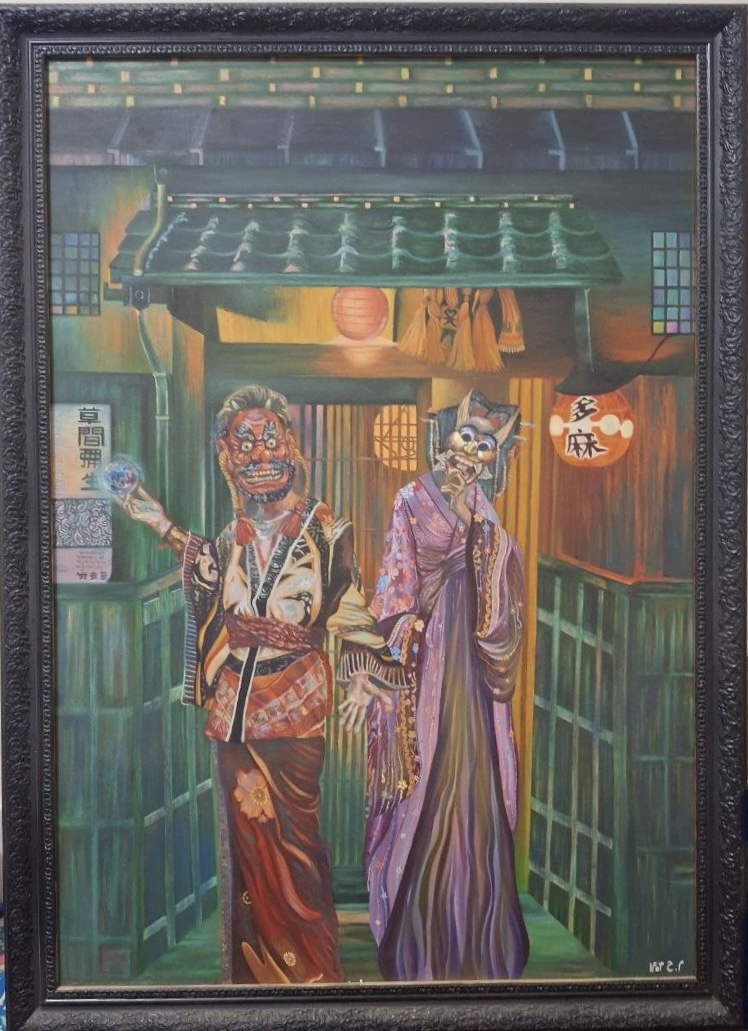
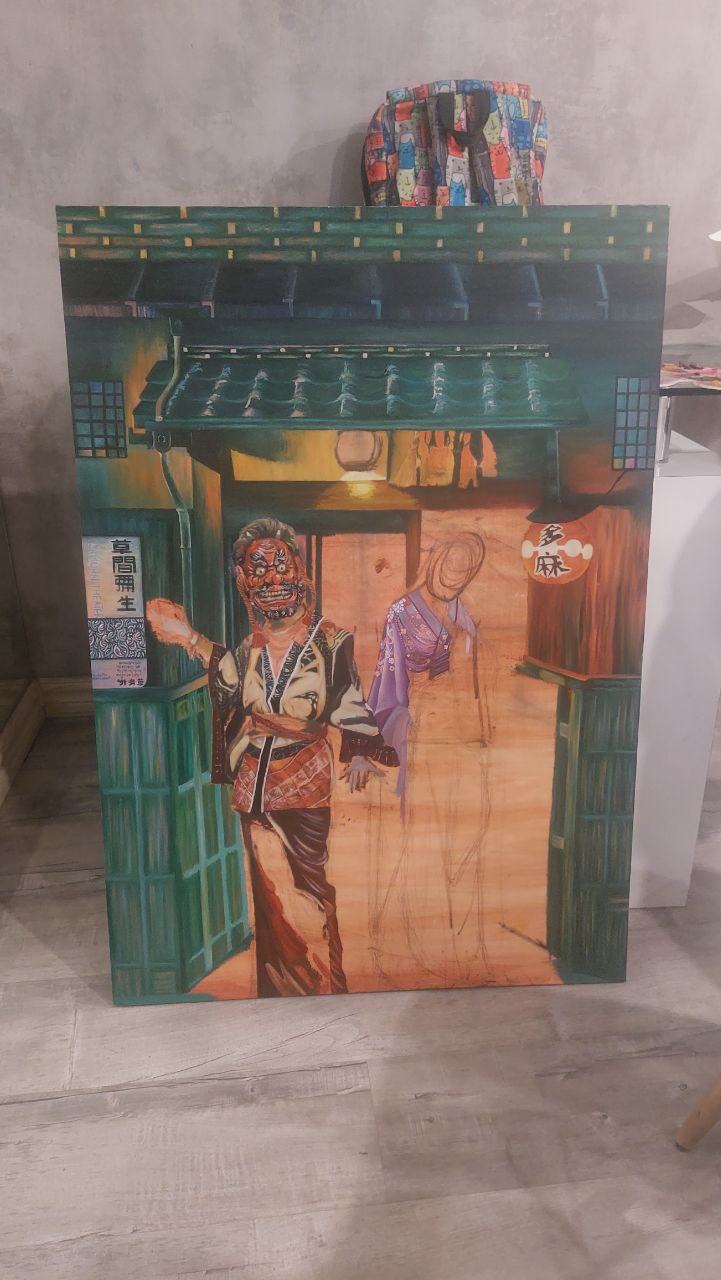
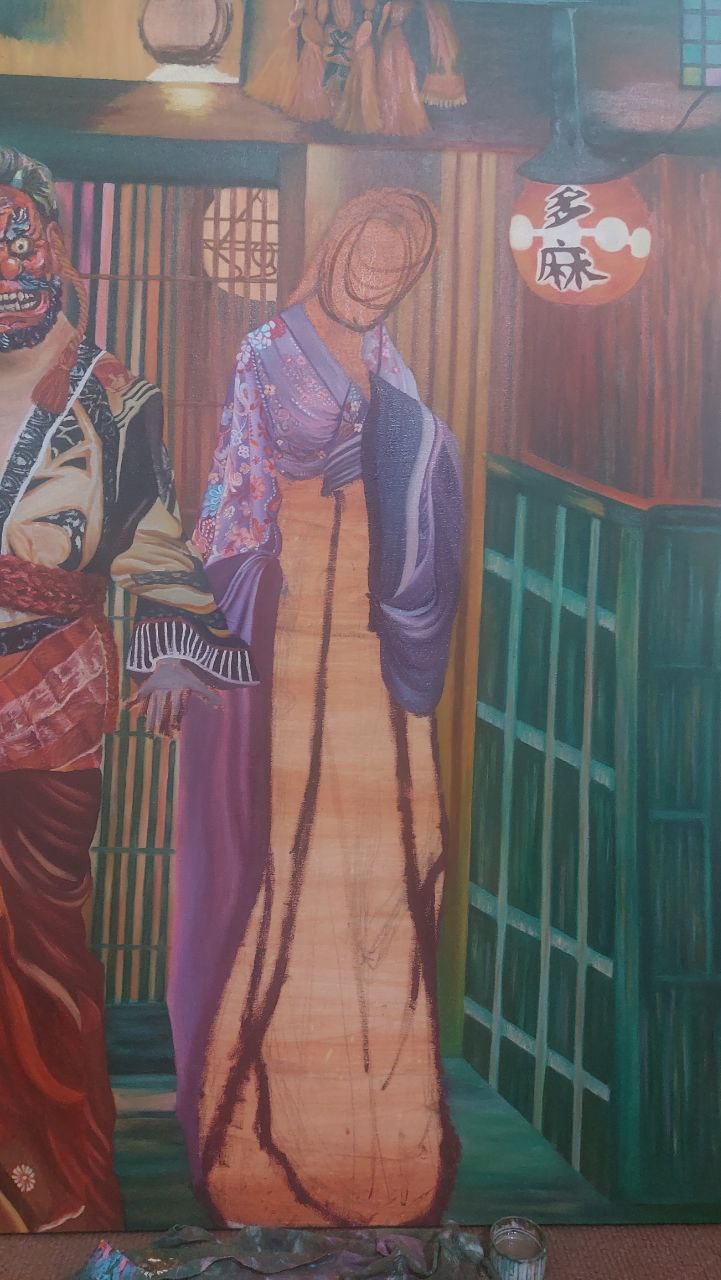
The man wore a black kimono fastened with a red rope-like sash and concealed his face behind a demonic oni mask bearing a terrifying grin. The woman, dressed in a purple kimono embroidered with golden patterns, held his hand.
Tonight was the night of the final Kabuki performance...
The woman, whose name was Sayori, spoke softly.
"...You shouldn't have come back, Ichikawa."
The man paused. His face remained hidden behind the mask, but Sayori could sense the bitter smile on his lips.
"I had to return. To bring this unfinished performance to an end."
Ten years earlier, in this very small Kabuki theater in Tama, Ichikawa had given his last performance. Yet in the middle of the play, he vanished.
No one ever saw him again, and no body was ever found.
Some said he had run away. Others believed that the spirit of the theater had swallowed him whole.
But now, after ten years, he had returned.
Sayori and Ichikawa entered the theater. The dim glow of a lantern fell upon the wooden stage. It looked exactly as it had when it was abandoned ten years ago.
Hesitantly, Sayori asked:
"Now that you're back, tell me... what happened that night?"
Ichikawa remained silent for a moment. Then he stepped forward and said quietly:
"That night, the moment the curtain rose, I realized that I was no longer Ichikawa. In Kabuki, the actor and the role become one. But I... I lost myself too deeply in my character. I no longer knew whether I was Ichikawa or the person I was portraying. And when the curtain fell, it was as though I no longer existed."
Sayori held her breath.
She finally understood the truth: Ichikawa had neither died nor fled. He had become imprisoned within his role.
"What happens now?" she asked.
Ichikawa slowly walked toward the stage.
From somewhere in the distance came the sound of Kabuki drums, as though a theater full of spectators were waiting for the performance to begin.
He turned and looked at Sayori one final time.
"This time, I'll let the curtain fall."
Then, with a single motion, the theater's red curtain descended.
The lights went out.
When Sayori rushed forward and pulled the curtain aside, no one was there.
The following morning, the Kabuki theater in the Tama district closed its doors.
But from that night onward, whenever an actor wearing a demonic mask stepped onto a Kabuki stage, Sayori felt that Ichikawa was still there-perhaps among the shadows, still imprisoned within his role.
And perhaps now that you, too, have been staring at this painting, you may have become trapped within the Kabuki theater or somewhere else entirely.
Let the theater's red curtain fall.
A man and a woman emerged from the darkness.
The man wore a black kimono fastened with a red rope-like sash and concealed his face behind a demonic oni mask bearing a terrifying grin. The woman, dressed in a purple kimono embroidered with golden patterns, held his hand.
Tonight was the night of the final Kabuki performance...
The woman, whose name was Sayori, spoke softly.
"...You shouldn't have come back, Ichikawa."
The man paused. His face remained hidden behind the mask, but Sayori could sense the bitter smile on his lips.
"I had to return. To bring this unfinished performance to an end."
Ten years earlier, in this very small Kabuki theater in Tama, Ichikawa had given his last performance. Yet in the middle of the play, he vanished.
No one ever saw him again, and no body was ever found.
Some said he had run away. Others believed that the spirit of the theater had swallowed him whole.
But now, after ten years, he had returned.
Sayori and Ichikawa entered the theater. The dim glow of a lantern fell upon the wooden stage. It looked exactly as it had when it was abandoned ten years ago.
Hesitantly, Sayori asked:
"Now that you're back, tell me... what happened that night?"
Ichikawa remained silent for a moment. Then he stepped forward and said quietly:
"That night, the moment the curtain rose, I realized that I was no longer Ichikawa. In Kabuki, the actor and the role become one. But I... I lost myself too deeply in my character. I no longer knew whether I was Ichikawa or the person I was portraying. And when the curtain fell, it was as though I no longer existed."
Sayori held her breath.
She finally understood the truth: Ichikawa had neither died nor fled. He had become imprisoned within his role.
"What happens now?" she asked.
Ichikawa slowly walked toward the stage.
From somewhere in the distance came the sound of Kabuki drums, as though a theater full of spectators were waiting for the performance to begin.
He turned and looked at Sayori one final time.
"This time, I'll let the curtain fall."
Then, with a single motion, the theater's red curtain descended.
The lights went out.
When Sayori rushed forward and pulled the curtain aside, no one was there.
The following morning, the Kabuki theater in the Tama district closed its doors.
But from that night onward, whenever an actor wearing a demonic mask stepped onto a Kabuki stage, Sayori felt that Ichikawa was still there-perhaps among the shadows, still imprisoned within his role.
And perhaps now that you, too, have been staring at this painting, you may have become trapped within the Kabuki theater or somewhere else entirely.
Let the theater's red curtain fall.